

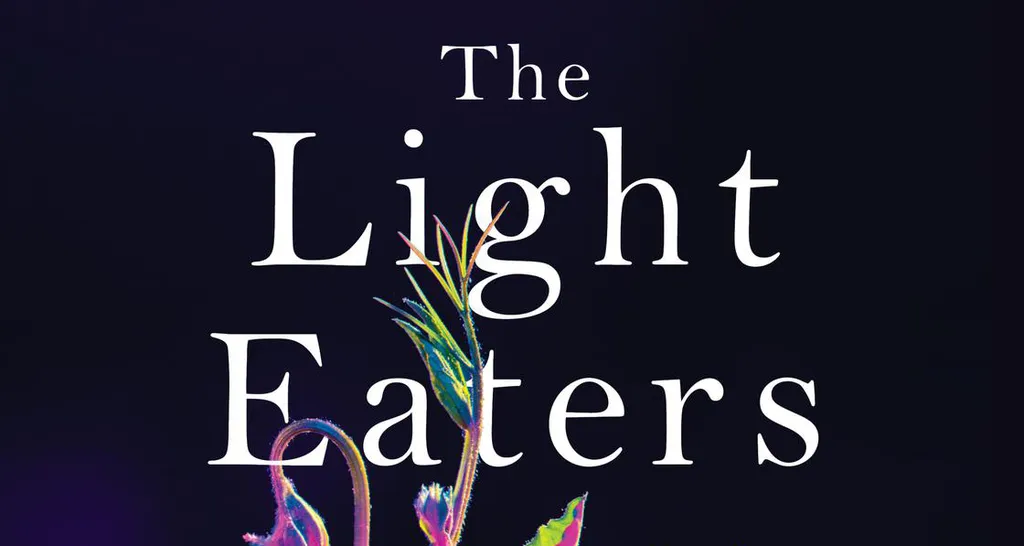
Book Discussion: The Light Eaters
Location

About
Discuss Zoë Schlanger’s new book The Light Eaters with us on March 19.
In conjunction with our exhibition, Returning To Wonder, join us in reading Zoë Schlanger’s acclaimed new book, The Light Eaters: How the Unseen World of Plant Intelligence Offers a New Understanding of Life on Earth. We will come together on March 19 for an engaging discussion of the book, led by KUER’s Cristy Meiners.
More about The Light Eaters:
- NEW YORK TIMES BESTSELLER
- The New Yorker’s Best Books of 2024 • TIME’s 10 Best Nonfiction Books of 2024 • New York Magazine’s 10 Best Books of the Year • Washington Post’s 50 Notable Works of Nonfiction of 2024 • Smithsonian’s 10 Best Science Books of the Year
- A Best Book of the Year: Boston Globe, Scientific American, New York Public Library, Christian Science Monitor, Library Journal, and Publishers Weekly
- An Amazon Best Nonfiction Book of the Year
- Longlisted for the National Book Critics Circle Nonfiction Prize • Finalist for the Chautauqua Prize • Finalist for the Los Angeles Times Book Prize • Winner of the National Outdoor Book Award for Natural History
"A masterpiece of science writing." – Robin Wall Kimmerer
"Mesmerizing, world-expanding, and achingly beautiful." – Ed Yong
"Rich, vital, and full of surprises. Read it!" – Elizabeth Kolbert
Award-winning Atlantic staff writer Zoë Schlanger delivers a work of popular science that probes the hidden world of the plant kingdom, "destabilizing not just how we see the green things of the world but also our place in the hierarchy of beings, and maybe the notion of that hierarchy itself." (The New Yorker)
Plants have adapted ingenious methods of survival while rooted in a single spot. Recent research describes their ability to communicate, recognize kin and behave socially, hear sounds, morph their bodies to blend into surroundings, store useful memories that inform life cycles, and trick animals to their benefit, among other talents.
The Light Eaters is a deep immersion into the drama of green life and the complexity of this world that challenges our understanding of agency, consciousness, and intelligence. Schlanger suggests plants may have formed a parallel system of intelligence: a vine that grows leaves to blend into the shrub it climbs, a flower shaped to fit exactly the beak of its pollinator, a pea seedling that can hear flowing water and move toward it. Schlanger travels across the globe and into the soil with scientists who study these discoveries, and she examines the intellectual struggles among researchers as they debate the tenets of a changing field.
What can we learn about life on Earth from organisms that thrive, adapt, consume, and accommodate simultaneously? More important, what do we owe these life forms once we come to understand their abilities?
About Cristy Meiners:
A lifelong lover of the arts, Cristy Meiners got into journalism because she hoped she’d be able to read books, go to concerts and watch movies for work; surprisingly, she’s pulled off just that for much of her career. After spending nearly 10 years as an arts producer, first in Washington DC for NPR, then with SiriusXM’s "The Bob Edwards Show" and "Bob Edwards Weekend," Cristy returned to Utah to work as the arts and entertainment editor at the Deseret News before coming to KUER, where she now serves as station manager.