

2026 Lecture Series Roundtable Discussion
Performers
Location

About
Join us 7 p.m. on April 14 at NHMU for an expert panel discussion on microplastics.
Unseen Impacts — Microplastics in Our Environment
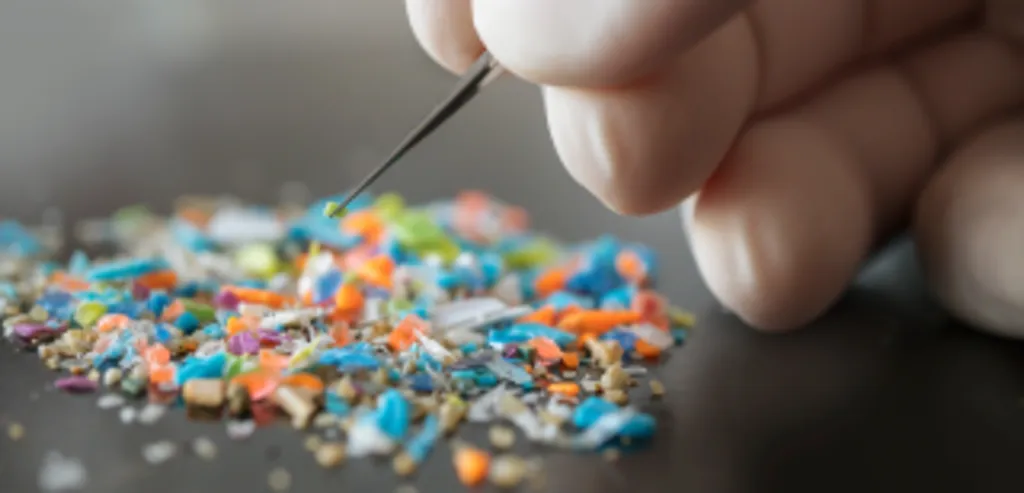
Microplastics are no longer an unseen issue but an unavoidable reality — they’re in our environment, our food systems, and even our bodies. As scientists unravel how these tiny, human-made particles move through ecosystems and affect both environmental and human health, a clearer picture of their global consequences is emerging.
Join us for an essential exploration of microplastics with a panel of three experts who will examine efforts to reduce microplastics in our oceans, investigate their impacts on the human body, and reveal where researchers are finding them here in Utah.
Panelists
- Abigail Barrows | Founder & Owner, Deer Isle Oyster Company; Microplastic Pollution Research Scientist
- Matthew Campen, Ph. D. | Director, New Mexico Center for Metals in Biology and Medicine, Regents' Professor, Professor, Pharmaceutical Sciences
- Sally Rocks, Ph. D. | Associate Professor of Chemistry at Utah Valley University
This event is free to attend with registration.
About the Panelists
Abigail Barrows
Abby Barrows is a microplastic pollution research scientist and the founder and owner of Deer Isle Oyster Company, a regenerative oyster and kelp farm in Maine. Since 2013, she has led global microplastic sampling efforts and developed one of the largest and most diverse open-source datasets on microplastic pollution worldwide. Her research has been published in multiple peer-reviewed scientific journals and has helped establish baseline data for microplastic contamination across marine and freshwater systems. Her work bridges field science, sustainable food systems, and applied innovation, including the development of plastic-free aquaculture gear. Abby has been featured in numerous national and international media outlets and continues to advocate for upstream solutions to plastic pollution through research, policy, and industry redesign.
Matthew Campen, Ph. D.
Matthew Campen, Ph. D., is an environmental health scientist who studies how tiny particles in the air we breathe affect the heart, blood vessels, and other organs throughout the body. He earned a BS in Biochemistry from Virginia Tech, a PhD in Environmental Science and Engineering from the University of North Carolina at Chapel Hill, and completed postdoctoral training in pulmonary physiology at the Johns Hopkins University School of Medicine. Campen’s research examines how complex mixtures of inhaled particles enter the body and trigger biological changes that influence respiratory, cardiovascular, and neurological health. By combining laboratory studies with insights from clinical and community research, his work helps explain how everyday environmental exposures can contribute to chronic diseases. His recent studies have shed light on molecular pathways linking air pollution to brain and vascular health, providing a foundation for understanding the potential health risks of microplastics and other emerging airborne pollutants.
Sally Rocks, Ph. D.
Sally Rocks, Ph. D., explores the intersection of chemistry and environmental science, with a focus on microplastic pollution in natural waters. Her current projects study microplastic levels in Utah Lake, the Wasatch snowpack, and the lakes within Timpanogos Cave, examining how human activity influences microplastic pollution levels. Because these waters are critical for drinking and irrigation, her work contributes to a broader interdisciplinary dialogue on environmental health, sustainability, and the human impact on ecosystems. She received her BS in Chemistry from Bucknell University, PhD in Bioinorganic Chemistry from the University of Rochester, and completed postdoctoral work in Environmental Geochemistry at Princeton University. After working on hydrometallurgical process research and development, she left industry and joined the faculty at Utah Valley University in 2017. At UVU she loves teaching and pursuing research on environmental topics. When not in the classroom or the lab, Dr. Rocks is outside enjoying skiing, camping, biking and climbing with her family.