

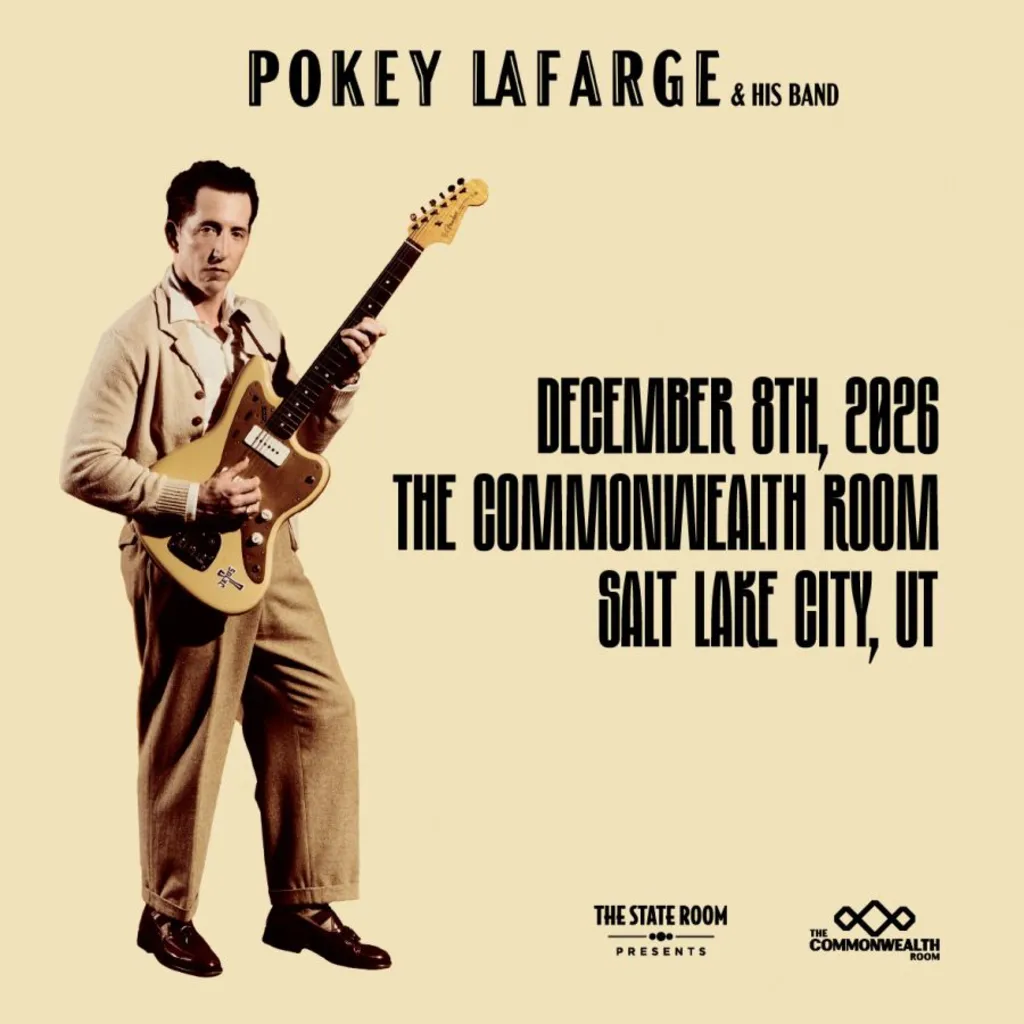
Pokey LaFarge
Performers

Location

About
For two decades, Pokey LaFarge has walked his own effortlessly cool road as an iconoclastic troubadour—forthright, genuine, and keen to put it all out there. Rent Money finds the Illinois native pushing forward with what is described here as his finest collection to date, both a heartfelt expression of personal experience and social commentary. With twanging guitars, plucky rhythms, and captivating melodies, songs like the album opener "The Thing" and the tub-thumping title track survey kitchen-table issues, inter-class discontent, and LaFarge’s own fears and unease about the future. "My Baby Loves Me" and the soul dancefloor-filler "Stick Together" soar and swing, their joyous refrains masking an undercurrent of worry and angst about these troubled times.
"I certainly want to sing pretty songs," LaFarge says. "But I’m not impervious to the issues that are happening today in the world. There was so much talk while I was writing this record, about the economy and how everything is more expensive today than it was yesterday. How kids barely know their parents, because both parents have to work two jobs. Just the absurdity of it all. It really does make you, I don’t want to say angry, but it makes you want to play music that’s a little bit tougher."
As always, LaFarge traverses genre boundaries, integrating strains of 20th-century American music with earnest songcraft and inspired performance. Following 2024’s Rhumba Country, Rent Money—produced again by Elliot Bergman (Wild Belle, LA LOM, Natalie Bergman)—builds on a wide panoply of influences, spanning urban blues, primal rock ’n’ roll, early jazz, ragtime, first-wave reggae, boogie, gospel, and electric country funk, all blended into a distinctive honky-tonk sound.
Recorded over a series of sessions at Bergman’s studio just outside Chicago, the arrangements are kept crisp and uncluttered so every nuance of instrument and voice can be heard. Much of the album was crafted in spontaneous first takes, with LaFarge laying down grooves and licks that were then augmented by Bergman and trusted band members. Backing vocals include his wife and frequent co-writer Addie Hamilton, and Natalie Bergman.
"I don’t know much about studio stuff," LaFarge says. "I just know what I want the song to sound like. I’m always just thinking about the song and the performance, and then hopefully the people that are in the studio with me can make it work. That’s why finding the right producer matters... Elliot definitely knows who I am for the most part and is able to kind of heighten that in the studio."
Though more explicit about his social conscience than some previous records, Rent Money doesn’t lay blame or point fingers. LaFarge chooses the perspective of the common man, speaking to values and experiences he sees as universal. "My perspective with most things, whether they be social issues, maybe quasi-political issues, I very rarely choose to be overt," he says. "That’s the antithesis of poetry for me. I would rather be a little bit more subversive and, like the artist MC Escher, create a different perspective. Planting seeds and saying things in a different way that hopefully allows people to look at things from a different light."
Songs such as "Work" and a self-penned new "Big Boss Man" examine how hard work in hard times doesn’t always pay the bills, exploring the effects of politics on living people without direct polemic. "I’m not making any accusatory statements," LaFarge says. "I’m trying to get at the truth of who we are in America today. Things like pursuit of wealth and comfort and convenience... how those things have become more important than culture, integrity, family, and things of that nature. We’re all a part of this thing called America, and my idea is to just kind of talk about things in a poetic way. That’s the best way to sing. That’s how we started singing in the first place. We sing poems."
Now living in Maine with Addie Hamilton and their newborn daughter, LaFarge turns a down-to-earth eye toward personal matters on tracks like the gospel-inflected "Stranger" and the border-radio swoon "Told You No." He reflects on a career of travel and rejection: "I chose not to play pop music... I’ve made a living for 20 years playing music, but, man, it can be hard. It hasn’t been an easy path. I’m sort of out there plowing my own field. I’ll continue writing songs, but who knows..."
LaFarge sees Rent Money as an opportunity to engage audiences in a frank conversation about what unites people despite differences. The record is presented here as a defining collection from an artist who aims to craft deeply human music on his own terms. "People are always going to tell you what they think you should play... And I’ve always just been like, nah. Nope. I’ve just completely gone my own way, and hopefully I’ve been honest and authentic in the process. I’m just trying to make music that AI can’t replicate. Things are so homogenized right now. That’s what I’m really, really, really resistant to, especially when it comes to music. I’m not going to do it. I’m not going to conform."
Cicada Rhythm has been on a hiatus of sorts, gathering strength underground and now emerging with a new record after nearly seven years. Andrea DeMarcus, a Juilliard-trained bassist, and Dave Kirslis, a train-hopping guitarist, met in 2011 in Athens. Their musical and romantic partnership led to marriage, roots in the community, and two critically lauded albums: a 2015 self-titled record and 2018’s Everywhere I Go.
The duo’s foot-stomping rhythms, electrifying harmonies, and open-road sensibilities helped define their sound. When the 2020 pandemic halted live music livelihoods, Kirslis turned to carpentry and DeMarcus found a deeper, less pressured relationship with music. They also renovated an abandoned 1800s farmhouse and moved in this summer; that home and land will be the location of the seventh annual Cicada Rhythm farm show, which will also serve as a release show for their upcoming album.
After years focused on carpentry and other projects, Kirslis and DeMarcus assembled a back catalog of unreleased music that became Magic State, a 12-track record that retains their signature sound while exploring a more nebulous, questioning territory. "The album is about questioning truths you once thought were concrete," DeMarcus says. The record opens with "Oranges and Cream," an intimate love song by DeMarcus, and includes "Quick Buck," inspired by Kirslis’ scrapping hobby and a trip to Athens Recycling.
Magic State was recorded over a five-day period at Colin Agnew’s home studio in Madison and is being released independently. The album art was created by Flournoy Holmes. "Music became more of an outlet," DeMarcus says of the post-pandemic approach to performing and recording, and the new record reflects life in transition and the possibilities of change.